What does it actually take to turn meme coin trading into a seven-figure result?
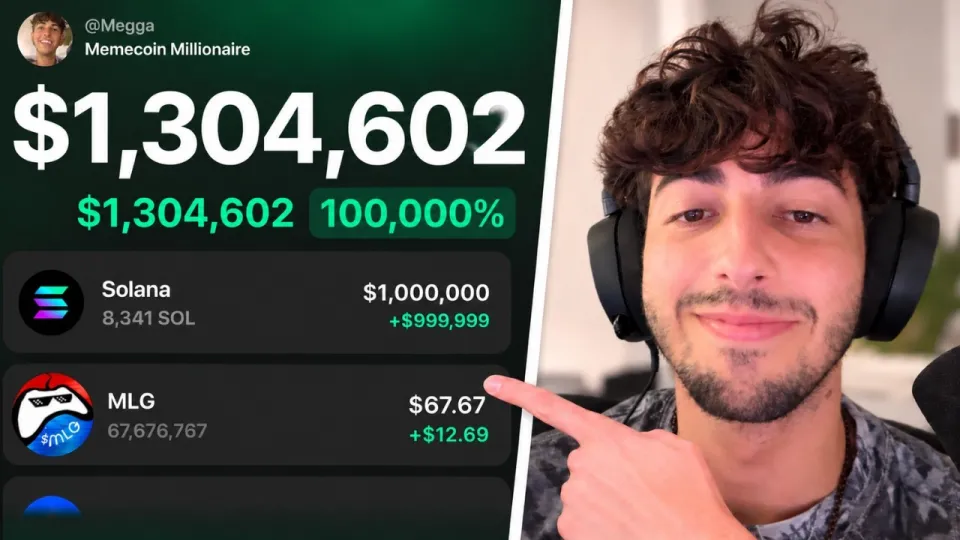
Video: How I Made $1,000,000 Trading Memecoins (FULL BREAKDOWN)
You can order the same kind of articles for your own video to boost it on YouTube and Google. Just message the Telegram bot @sat_sit_bot. It writes articles around your video, embeds the video and publishes them on popular niche websites (no ads). Free trial — 50 articles.
· based on the channel Megga
Meme coin trading is a high-risk, high-speed niche where a small account can multiply fast and vanish just as fast, and the $1,000,000 breakdown published by the trading creator Megga is a useful case study of what sits behind such a number: long hours, repeated losses and strict risk control rather than luck. The video's description points viewers to a free trading course for anyone who wants the full framework rather than the highlight reel.
What is a meme coin and why do traders chase them
A meme coin is a cryptocurrency with no cash flow, product or balance sheet behind it, whose price is driven almost entirely by attention, community and liquidity. That structure explains both sides of the trade: there is no valuation floor to anchor the price, so a coin can go up 10x or 100x in hours, and it can also lose 90% of its value in minutes when the crowd rotates out.
For a trader, the appeal is asymmetric upside on small positions. The cost is that you are competing with bots, insiders and thousands of other people watching the same feeds. The video's comment section makes the uncomfortable part explicit: money has to come from somewhere, so the profit of one participant is, in aggregate, the loss of another. Anyone entering the niche should treat that as the core rule, not a footnote.
The routine behind a seven-figure meme coin result
Megga's account of the journey is built on volume of work rather than a single lucky trade. A viewer asked directly what fills a 9-to-12-hour day, which is the right question to ask of any trading breakdown. In practice, that time goes into:
- Scanning new launches and tracking wallets and communities that historically move early.
- Reading narratives and checking whether liquidity and holder distribution support a position.
- Managing open positions: scaling out, moving stops, watching for exit liquidity.
- Reviewing the day's trades and logging mistakes instead of only counting profit.
None of those steps is glamorous, and none produces a screenshot on its own. The $1,000,000 figure is the sum of thousands of small decisions, many of which lose money.
Risk, drawdowns and the losses nobody posts
The most common misunderstanding about meme coin trading is that skilled traders avoid losses; in reality they survive them. Several viewers described exactly the pattern that breaks accounts: a big win followed by a drained wallet, a phishing loss, or a string of bad trades that leaves a trader mentally off and unable to follow their own rules.
That sequence is the real risk profile of the niche:
- Wallet security. Phishing links and malicious token approvals can empty a wallet without any bad trade at all.
- Position sizing. A 200x on a tiny position is a story; a 200x on an oversized position is a reason to stop sizing by conviction alone.
- Emotional drawdown. After a large loss, the urge to recover quickly usually produces the next large loss.
- Liquidity risk. A position is only worth what someone will pay for it; thin books turn paper gains into real losses on exit.
Megga's framing, echoed by long-time viewers, is that losing is part of the learning process and consistency matters more than any single result. That is not motivational filler: it is the difference between a trader who is still around after a year and one who is not.
Common questions from traders trying to copy the result
The questions viewers actually ask are practical, and they map to the real bottlenecks of the niche.
How much capital do you need to join trading groups? There is no official threshold, but communities tend to filter by track record. A reported all-time profit in the tens of thousands of dollars is usually enough to be taken seriously in calls and direct messages, because it shows you have survived real conditions rather than only paper trading.
How do you judge whether a narrative or a technical meta will actually run? This is pattern recognition built from repetition: watching how similar launches behaved, how liquidity arrived, and where the crowd exited. Early entries in the first tens of thousands of dollars of market cap require speed and a prepared process, not just an opinion.
What if you have a job and cannot watch charts all day? Then the full-time version of this strategy is not available to you, and pretending otherwise is how people lose money. The realistic options are longer timeframes, pre-set rules and smaller size, accepting that you will miss most fast launches.
Is the profit real if the market is zero-sum? It is real for the person who exits, and it is paid by whoever bought at the top. That is why exit discipline and liquidity awareness matter more in meme coins than in almost any other market.
Useful links from the breakdown
- Free trading course — the full framework referenced in the video.
- Low-fee trading platform — the platform Megga uses for execution.
- Twitch — live trading sessions.
- TikTok and Twitter — short-form updates and commentary.
Final takeaway
A $1,000,000 meme coin result is not a shortcut, it is the visible end of a process built on 9-to-12-hour days, logged mistakes and repeated recovery from drawdowns. The transferable lessons are unglamorous: protect the wallet, size positions so a loss cannot end the account, treat every gain as someone else's exit, and expect long stretches where nothing works. Megga's breakdown is valuable precisely because it shows the trenches rather than only the payout, and the free course linked in the video is the place to start if you want the mechanics behind the story. Treat the number as an outcome, not a target, and the niche becomes survivable.
Key takeaways
- Megga's breakdown covers a $1,000,000 result built trading meme coins in the "trenches"
- The routine described is 9 to 12 hours a day of screen time, not casual trading
- Meme coin gains are paid by other participants: every winner needs a buyer at the top
- Drawdowns and losing streaks are treated as part of the process, not an exception
- A free course and a low-fee trading platform are linked in the video description
Questions & answers
How much money can you realistically make trading meme coins?
Results range from total loss to life-changing gains, and the distribution is heavily skewed. A seven-figure outcome like the one in Megga's breakdown comes from years of screen time, many losing trades and strict risk control, not from a single lucky entry. Most participants lose money because they buy attention after the move has already happened.
Do you need to trade full time to profit from meme coins?
Full-time attention is a real advantage because new launches move within minutes, and the routine described in the video involves 9 to 12 hours a day. If you have a job, the workable approach is smaller size, pre-defined rules and longer timeframes, accepting that you will miss most fast opportunities.
What is the biggest risk in meme coin trading?
Wallet security and position sizing are the two risks that end accounts. Phishing links and malicious token approvals can drain a wallet without a single bad trade, while oversized positions turn an ordinary drawdown into a wipeout. Liquidity is the third: a paper gain is only real once someone buys it from you.
Where can beginners learn the full process shown in the video?
Megga links a free trading course in the video description, alongside the low-fee platform used for execution and the social channels where live sessions are streamed. Working through the course before risking capital is the sensible order, since the strategy depends on process rather than on picking one coin.
Source: How I Made $1,000,000 Trading Memecoins (FULL BREAKDOWN) · Markdown version